

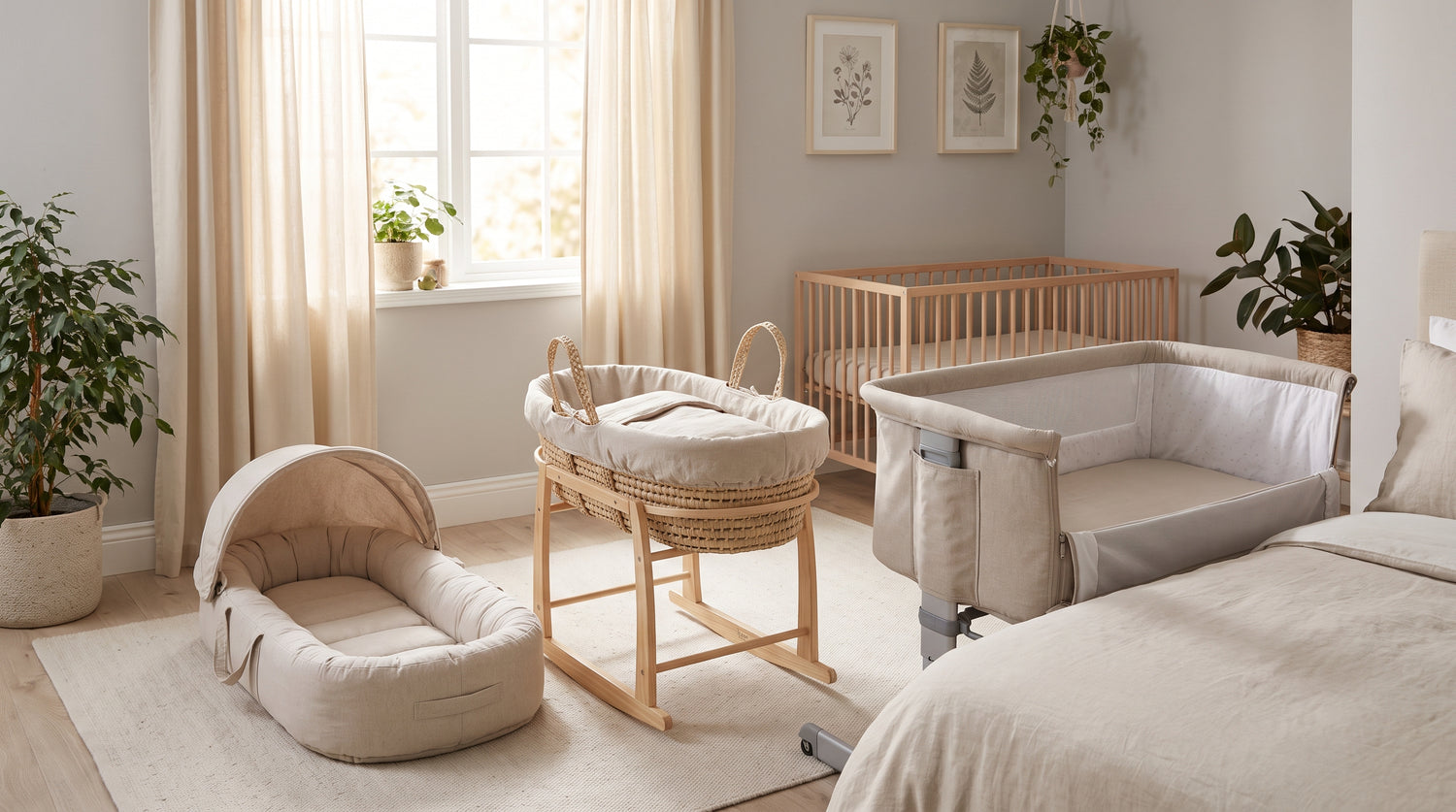
Newborn Sleeping Nest Bed vs. Moses Basket vs. Co-Sleeper: Which Is Right for You?
Every family has different needs, and the sleeping arrangement for a newborn is one of the most personal decisions you'll make. Here's a practical comparison of three popular newborn sleep solutions.
Newborn Sleeping Nest Bed
Best for: Supervised daytime napping, portable comfort, settled babies who struggle on open surfaces.
Pros: Portable and lightweight; provides womb-like containment; versatile for use in multiple rooms; easy to clean; typically lower cost.
Cons: Not for unsupervised overnight sleep; shorter use period (birth to 6-9 months).
Moses Basket
Best for: Newborns needing a portable sleeping space for the first few months, bedside overnight use.
Pros: Traditional breathable design; appropriate for overnight sleeping; portable with handles.
Cons: Short use period (approximately 3-4 months); requires separate stand; can be expensive.
Bedside Co-Sleeper
Best for: Parents who want baby immediately adjacent to the adult bed for overnight feeding and comfort.
Pros: Safe co-sleeping arrangement; immediate access to baby during night feeds; adjustable height.
Cons: More expensive; requires dedicated space beside the bed; less portable.
Our Recommendation
For most families, combining a sleeping nest (for daytime supervised napping) with a bassinet or bedside sleeper (for overnight sleep) covers all bases beautifully.
👉 Ready to get yours? Check out the Newborn Sleeping Nest Bed — available now at Baby Bubble Store with fast shipping.
Shop Now →



Leave a comment
This site is protected by hCaptcha and the hCaptcha Privacy Policy and Terms of Service apply.